
Engine Carbon Cleaning
Mobile hydrogen carbon cleaning across Manchester. Petrol or diesel, the engine stays in the car, and the whole job takes around an hour.
Clearing Carbon Without Stripping The Engine
Every engine accumulates carbon. It forms in the air intake, on the valves and inside the combustion chamber as a by-product of burning fuel, and what does not stay there ends up in the turbo, the EGR and the exhaust. It builds up fastest on vehicles that spend most of their life doing short, low-speed journeys. Left long enough, that build-up starts to interfere with how cleanly and freely the engine breathes.
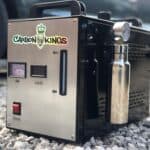
We clean it out using a Carbon-K G7s hydrogen machine. It generates hydrogen on the spot and feeds it into the air intake while the engine runs, so it burns at a high temperature inside the engine and helps break carbon deposits down so they can be carried out through the exhaust. Nothing is dismantled, nothing corrosive goes into the engine, and the whole cycle takes about an hour on your driveway.
We will be straight with you about what a clean can and cannot do. It removes carbon build-up - it is not a repair. If your symptoms are being caused by a failing sensor, a mechanical fault or a DPF that is already blocked, a carbon clean will not fix that and we will tell you so rather than take the booking. If you are not sure what is behind it, we will recommend a mobile diagnostic first so we find out rather than guess.
What's Included
Which Parts Of The Engine Get Cleaned
The hydrogen goes in through the air intake and out through the exhaust, following the same route the air and exhaust gases already take. So the simple answer to what gets cleaned is everything on that route - and the closer a part sits to where the fuel actually burns, the more difference it makes.
Combustion Chambers
The piston crowns, the cylinder head and the chamber walls. This is where the fuel burns, so it is where the hydrogen does most of its work and where a clean makes the biggest difference.
Intake Tract & Valves
The hydrogen enters here, so the intake side is the first thing it reaches on the way through. Direct injection engines are a special case, covered below.
Exhaust Valves & Ports
Everything leaving the cylinder passes the exhaust valves and ports on its way out, carrying loosened carbon with it.
Turbocharger
Exhaust gases drive the turbine on their way out, so the hot side of the turbo sits directly in the path of the clean. Clearing soot off it can sharpen how quickly the turbo responds.
Injector Tips
On a direct injection engine the injector tips sit inside the combustion chamber, so they get the same treatment as everything else in there. What a clean will not do is repair an injector that is worn, leaking or electrically faulty. That is a different job, and we will say so if that is what we think you have.
EGR, Catalytic Converter & DPF
These sit further down the exhaust line, taking whatever the engine sends out. Cleaner combustion means less soot arriving at them. A carbon clean will not unblock one that is already clogged - for that you need a DPF regeneration or a deeper DPF cleaning treatment, and we will tell you which.
Direct Injection Engines: What To Expect
On an older port injection engine, petrol washes over the back of the intake valves every time it runs, which helps keep them clean by itself. Modern direct injection engines spray the fuel straight into the cylinder instead, so nothing washes those valves and oil vapour bakes onto them over time.
A clean deals with those deposits while they are still building. Where they have been left to harden over a long time, the honest answer is that clearing them completely means taking the intake manifold off and blasting the valves in a workshop, which is not something anyone is doing on your driveway in an hour. Tell us the vehicle and the mileage when you call and we will give you a straight answer on which one you are looking at, before you book rather than after.
Signs Carbon Build-Up Might Be The Culprit
These are the symptoms carbon build-up commonly contributes to. None of them is proof of it on its own - each can have other causes, which is why we ask questions before we turn up.
Sluggish Response
The engine feels flat, hesitant off the line or slower to pick up than it used to be. Turbo lag that has crept in over time can point the same way.
Rough Running
An uneven idle, extra vibration through the car at a standstill, or an engine that just does not feel as smooth as it once did.
Smoke & Fuel Use
More smoke than normal from the exhaust, particularly on a diesel, or fuel economy that has gradually drifted worse with no obvious explanation.
What A Carbon Clean Can Help With
How much difference a clean makes depends on how much carbon has actually built up and whether it is what is causing the problem you have noticed. On a heavily coked-up engine the change can be obvious. On an engine that was already clean, there is less to gain - and we would rather say that than sell you one.
Performance & Throttle Response
Where deposits in the intake and combustion chamber have been holding the engine back, clearing them can restore lost performance and sharpen up throttle response.
Smoother Running
A rough idle and extra vibration are often a sign of uneven combustion. If carbon build-up is the cause, an engine usually settles and runs more smoothly after a clean.
Fuel Efficiency
If carbon deposits have been affecting combustion efficiency, removing them can help fuel economy. We will not quote you a percentage - it depends entirely on your engine and how it is driven.
Smoke & Emissions
Diesels in particular can produce noticeably less smoke once carbon build-up is cleared. Where the smoke has another cause, a clean will not fix it - and we will say so.
Turbo Response
Carbon deposits can restrict airflow through the intake side. Clearing that restriction can reduce turbo lag on engines where build-up was the limiting factor.
Preventative Maintenance
Keeping carbon build-up in check promotes cleaner combustion, which is worth doing on a diesel before soot loading starts causing DPF headaches rather than after.
How It Works
Tell Us The Vehicle
Give us the make, model, engine and what the car is doing. We will confirm it is suitable, give you the fixed price on the phone and arrange a time.
We Come To You
We arrive at your home or workplace, connect the machine to the air intake and get it running. The engine goes through the cleaning cycle in place - nothing is taken apart.
Check & Hand Back
Once the cycle is finished we disconnect, check the engine is running as it should and talk you through what we found. You drive away straight after.
A carbon clean is the preventative option - the engine and emissions system stay exactly as the manufacturer built them. If a diesel has gone further than that, we also offer DPF regeneration and a deeper DPF cleaning treatment, both fully road-legal. DPF / EGR deletes are a different thing entirely and are for off-road, track and competition vehicles only. If a warning light is the reason you are here, fault code removal or a mobile diagnostic is the better starting point.
Not sure a carbon clean is what your vehicle needs? Browse the full services list, send us an enquiry or see our car and engine remapping service for an overview of everything we cover across Manchester.
Frequently Asked Questions
Hydrogen carbon cleaning is a way of clearing carbon deposits out of the intake and combustion chamber without dismantling the engine. Hydrogen is generated on site and fed into the air intake while the engine runs, so it burns at a high temperature inside the engine and helps break down and carry away carbon deposits that have built up over time. Nothing corrosive is poured into the engine and no parts come off. There is a full breakdown further up the page of which parts of the engine that actually reaches.
No. The engine stays exactly where it is and nothing is stripped down. We connect the machine to the air intake, the engine runs through the cycle on your driveway or wherever the vehicle is parked, and we disconnect afterwards. That is what makes it a service we can do fully mobile.
Yes, both. The machine covers petrol and diesel engines across a wide range of engine sizes, so cars, vans and 4x4s are all fine. Tell us the make, model and engine on the phone and we will confirm it is suitable before we arrange a visit.
Around an hour from arriving to packing up, depending on the engine. You can drive away as soon as we are done - there is no downtime, no fluids to settle and no follow-up visit needed.
It can, but we are not going to promise you a figure. If carbon deposits have been affecting how efficiently your engine burns fuel, clearing them can help. If your fuel economy has dropped for another reason - a failing sensor, a mechanical fault, tyres, driving style - a carbon clean will not change that. We would rather tell you that upfront than have you spend money on the wrong thing.
We do not sell it as an MOT fix. Emissions failures usually have a specific cause, and if that cause is a faulty component or a mechanical problem, cleaning carbon out will not resolve it. Where excess smoke genuinely is down to carbon build-up, a clean can reduce it - particularly on diesels - but that is not something we can guarantee in advance for your vehicle. Call us with what the emissions readings actually said and we will give you an honest view.
There is no fixed interval we would push on you. Carbon builds up faster on engines that do a lot of short, low-speed journeys and slower on cars that get regular longer runs, so it depends far more on how the vehicle is used than on a mileage number. If the car is running well and you have no symptoms, you do not need one.
It is a single fixed price and we will confirm it on the phone when you tell us the vehicle - no quote form, no waiting for a callback. We are fully mobile across Greater Manchester, including Manchester city, Stockport, Bolton, Salford, Bury, Oldham, Rochdale, Wigan, Trafford and the surrounding towns.
The hydrogen enters through the air intake and leaves through the exhaust, so it travels the same route as the air and gases already moving through the engine. That covers the intake tract and valves, the combustion chambers and piston crowns, the injector tips on a direct injection engine, the exhaust valves and ports, the turbo on the way out, and the EGR valve, catalytic converter and DPF downstream of that. The effect is strongest in the combustion chamber, where the fuel actually burns, and it eases off the further from it you go.
It deals with those deposits while they are still building up. Direct injection engines spray fuel straight into the cylinder, so nothing washes the back of the intake valves and carbon hardens on there over time. Where that has been left a long time, clearing it completely means having the intake removed and the valves blasted in a workshop rather than a gas clean on a driveway. Tell us the vehicle and the mileage and we will give you a straight answer on which one you actually need.
Not in the sense of unblocking one. The DPF sits downstream of the engine, so it only sees what comes out, and cleaner combustion means less soot arriving at it. That is what makes a carbon clean worth doing as maintenance on a diesel that is still regenerating properly. If the filter is already blocked or the DPF light is on, that is a different job, and we offer both a DPF regeneration and a deeper DPF cleaning treatment for exactly that. Call us with what the car is doing and we will point you at the right one.
Engine Feeling Flat?
Call us with the vehicle and what it's doing. We'll tell you honestly whether a carbon clean is the right answer.